This guide was created as part of Spring 2020' s Future Tense: Imagined Worlds from the Margins focus topic.
Edited in Fall 2025 in Undergraduate Research Mentorship with Brendan Riley and Hannah Holland Rutledge on Afrofuturism and AI
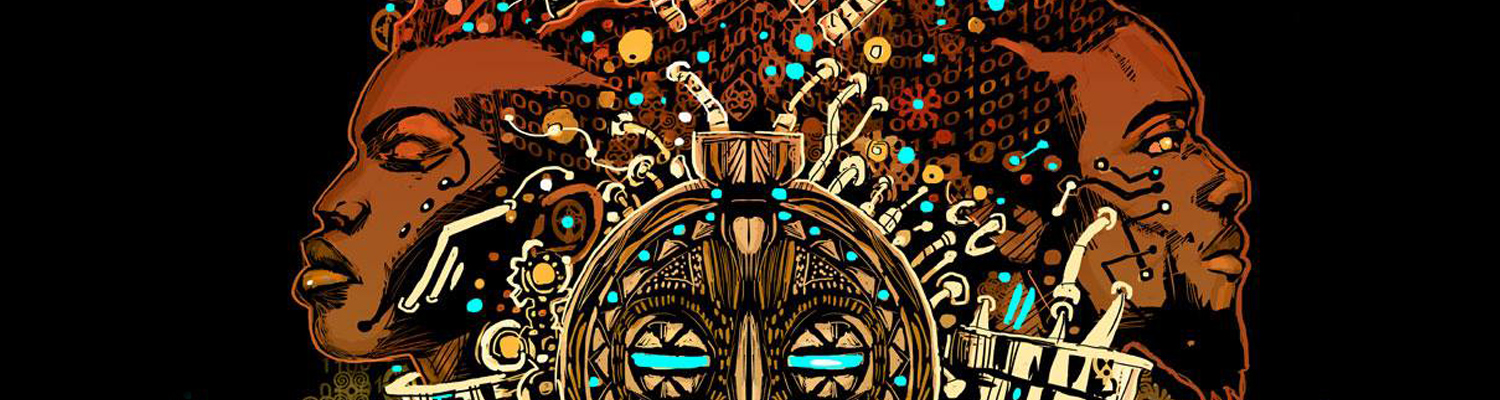
Afrofuturism, coined in Mark Dery’s “Black to the Future” essay in 1993, sought to encapsulate and explore commonalities and confluences among music, visual art, and writing by black creators. Melding the African diaspora with technology and science fiction themes, Afrofuturism has earlier roots in mid-20th century music, most notably Sun-Ra, whose mix of African culture and space age inspired sound influenced later musicians and artists, as well as writings from the Black Speculative Arts movement and mid-century science fiction. Re-imagining a future flush with art, science and technology through a black lens, Afrofuturism often explores themes of alien or “otherness”, utopian ideologies, the digital divide, feminism, the grotesque, and reclamation of culture.
In their video Clarified: What Is Afrofuturism?, Hearst Television explores the history, philosophy, and art of Afrofuturism. The channel describes the term as a movement for Black people who have been consistently excluded from science fiction and visions of the future. The movement’s ultimate objective is to liberate them.
Vox's Afrofuturism mixes sci-fi and social justice. Here's why delves into Afrofuturism through musical artist who used the movement to confront the past and envision a new future. The video incorporates several well known artist like Outkast, Janelle Monae, Parliament-Funkadelic and more. The video dives into ways these artist used lyrics and rhythms to fight discrimination and achieve cultural success.
Ytasha Womack, author, aArofuturist and Columbia Chicago alumni, dives into the significance of Afrofuturism as a fuel for black imagination and futures. Womack recognizes the barriers to black imagination using her experience with a class of African American fifth graders, who's only understanding of the future was a world without violence. Her presentation explores how our imagination can not only be used to guide African Americans further than the present but as a tool for social and personal liberation.